By Marcus Reid · Updated June 18, 2026 · Research-based, safety-first guide · Price tiers, not fixed dollars.
Graco Simple Sway Baby Swing
If you are weighing a baby swing vs car seat for naps, here is the short, honest answer up front: neither one is a safe place for your baby to sleep. Both can settle a fussy newborn…
🛡️ Why you can trust Baby Swing Club
- Neither a baby swing nor a car seat is a safe place for sleep, because both hold your baby at an angle that can block their airway.
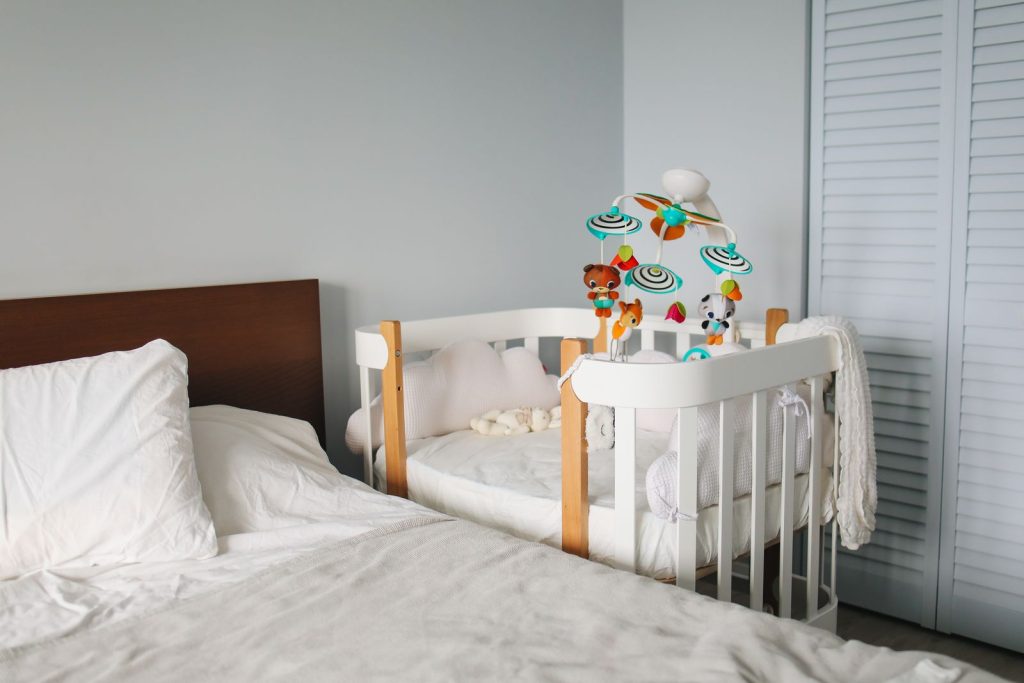
- For real sleep, move your baby to a firm, flat surface like a crib or bassinet, always placed on their back with no loose bedding.
- If your baby dozes off in a swing or car seat, buckle the harness, stay close and watching, and transfer them to a flat bed as soon as you can.
✓ Pros
- Power — AC adapter or batteries
- Motion — Side-to-side sway, 6 speeds
- Sound — 15 songs/sounds + vibration
- Footprint — Slim full-size frame
If you are weighing a baby swing vs car seat for naps, here is the short, honest answer up front: neither one is a safe place for your baby to sleep. Both can settle a fussy newborn while you watch. Both feel like a lifesaver at 5 p.m. when nothing else works. But the moment your baby drifts off, the safest move is the same in both cases — lift them out and lay them down flat, on their back, in a crib or bassinet.
I have spent years researching baby gear, and this is the question that trips up new parents more than almost any other. A swing rocks. A car seat travels. Both hold a sleepy baby in a curved, semi-upright position. It is easy to assume that if a baby falls asleep in one, you should just let them stay. The science says otherwise, and the reasons are worth understanding so you can make the call with confidence at 2 a.m.
This guide breaks it all down in plain language. We will cover what the AAP and CPSC actually recommend, why an inclined seat raises the risk during sleep, how a swing and a car seat differ in real daily life, and exactly what to do when your baby konks out in either one. You will get real-life situations — a small apartment, a long car ride, dinner one-handed — plus common mistakes, pro tips, and a quick checklist you can save. The goal is simple: help you use both products the smart way, and keep nap time safe.
- Baby Swing vs Car Seat for Naps: The Short Answer
- Why Parents Ask This in 2026
- What the AAP and CPSC Actually Say
- Why an Inclined Seat Is Risky for Sleep
- Swing vs Car Seat: How They Really Compare
- What to Do When Baby Falls Asleep (Step by Step)
- Common Mistakes (and Easy Fixes)
- Pro Tips for Everyday Use
- Real-Life Nap Scenarios
- Frequently Asked Questions
- Key Takeaways and Safe-Nap Checklist
Baby Swing vs Car Seat for Naps: The Short Answer
Here is the plain truth. A baby swing and a car seat are both fine for short, watched rest while your baby is awake or just settling. Neither one is a safe place for real sleep. The American Academy of Pediatrics (AAP) is clear: babies should sleep on a firm, flat surface, on their back, with nothing soft around them. A swing and a car seat are both curved and tilted, so they fail that test.
Why does the angle matter so much? A young baby has a heavy head and weak neck muscles. In a tilted seat, the chin can drop toward the chest. That position can press the airway closed without the baby being able to fix it. This is the heart of the safety concern, and it applies to a swing seat and a car seat carrier the same way once you take it out of the car.
So which is better for naps? Neither. The better question is which is better for soothing while you watch — and that depends on whether you are at home or on the road. At home, a swing usually wins because the motion calms a fussy baby and you can keep eyes on them. On a drive, the car seat is the only safe option, because crash protection comes first.
Real-life example: it is late afternoon in a small apartment, the baby is crying, and you need ten minutes to start dinner. A swing on its lowest motion can buy you that time while you stay in the room. The instant your baby is asleep, the plan is the same as always — move them to the crib. For a deeper look at the sleep side of this, see our guide on whether your baby can sleep in a swing.
Why Parents Ask This in 2026
This question comes up more than ever, and for good reason. Parents are tired, gear is everywhere, and the internet is full of mixed messages. One video shows a baby napping happily in a swing. Another warns that swings are dangerous. It is confusing, and confusion at 3 a.m. is the worst kind.
A few things changed the conversation in recent years. The Safe Sleep for Babies Act pushed inclined sleepers off the market, because too many were linked to infant deaths. That move sharpened a simple rule: products made for sitting or soothing are not products made for sleeping. A swing and a car seat both fall on the soothing side of that line, not the sleeping side.
Cost pressure plays a role too. Gear is not cheap, and a swing that doubles as a ‘nap spot’ feels like it saves money. It does not save anything if it is not safe. If budget is on your mind, our honest take on whether baby swings are worth it and the real cost of baby swings can help you spend smart without cutting safety corners.
There is also a new-parent reality at play: babies often sleep best in motion, which makes the swing and the car seat feel like magic. That magic is exactly why this matters. The gear works so well at soothing that it is tempting to let it become the bed. Knowing the difference between soothing and sleeping is the whole game.
Real-life example: a couple drives an hour to grandma’s house for the weekend. The baby sleeps the entire ride in the car seat, which is fine while the car is moving. The trap is arriving, carrying the seat inside, and letting the baby keep sleeping in it on the floor. That is the moment to transfer them to a flat, safe surface.
Soothing and sleeping are two different jobs. A swing and a car seat are great at one of them. A firm, flat crib is the only safe answer for the other.
- Never for sleep. Per AAP guidance, swings and inclined seats are not safe-sleep surfaces. If your baby dozes off, move them to a firm, flat crib or bassinet on their back.
- Always buckle the harness and never leave a baby unattended.
- Recline newborns in the most-reclined position until they have solid head control.
- Respect the weight limit and stop use once your baby can sit up unassisted. Buy only gear that meets ASTM/CPSC standards — see our safety standards guide.
What the AAP and CPSC Actually Say
Let us cut through the noise with what the experts recommend. The AAP’s safe-sleep guidance is short and steady: babies should sleep alone, on their back, on a firm and flat surface, with no pillows, bumpers, or loose bedding. A crib, bassinet, or play yard that meets safety standards is the right place. That is the standard every nap should aim for, day or night.
The AAP also says something directly about gear like swings, bouncers, and car seats: these are not recommended for routine sleep. If a baby falls asleep in one, the advice is to move them to a flat sleep surface as soon as you safely can. This is not a gray area. It applies whether the baby has been asleep for two minutes or twenty.
The Consumer Product Safety Commission (CPSC) sets the federal rules for the products themselves. Under current standards, infant sleep products must have a sleep surface that is nearly flat — a very low angle. Swings and car seats are not built to that flat-sleep rule, because they are not sleep products. They are soothing and travel products. That is the legal line, and it lines up with the medical advice.
Why this matters in plain terms: when two of the most trusted safety bodies say the same thing, you can stop second-guessing. The swing is for awake-time calm. The car seat is for travel. The crib is for sleep. To go deeper on the rules that govern this gear, read our baby swing safety standards guide.
Real-life example: a parent reads ten conflicting blog posts and feels stuck. The simple fix is to anchor on the official guidance instead of the loudest opinion. AAP says back, flat, firm. CPSC backs it up with product rules. Everything else is just noise.
Why an Inclined Seat Is Risky for Sleep
To use both products wisely, it helps to understand the actual risk. The danger from a tilted seat during sleep comes down to one word: positioning. A newborn’s head is large compared to the body, and the neck muscles are not strong yet. When a baby sleeps sitting up at an angle, gravity can pull the head forward and down.
This is called positional asphyxia. When the chin drops to the chest, it can fold the soft airway and make breathing hard. An awake baby would squirm and lift their head. A sleeping baby may not. The deeper the sleep, the less likely they are to self-correct. That is why a snooze in an upright seat is riskier than the same snooze flat on the back.
There are smaller risks too. A baby can slide down in a harness and end up in a slumped position. Soft padding meant for comfort can shift near the face. And the more time a baby spends pressed against one curved surface, the more it adds to concerns like flat head from steady pressure. None of these are reasons to avoid swings or car seats entirely — they are reasons to keep sleep out of them.
Here is the part parents miss: the risk is not about the brand or the price of the seat. A premium swing and a budget swing carry the same sleep risk, because the issue is the angle and the lack of supervision, not the features. The same goes for car seats — a top-rated seat is still not a crib.
Real-life example: during a long testing session, I have watched plenty of babies fall asleep in well-made swings within minutes. The swing did its job beautifully. But the right next step is always the same — pause the motion, unbuckle, and lay the baby flat. The quality of the swing does not change the rule.
The problem is not the swing or the car seat. It is the combination of an angled position, a deep sleep, and no one watching. Remove any one of those and the risk drops.
Swing vs Car Seat: How They Really Compare
Since neither is for sleep, the real comparison is about how you use each one for soothing and daily life. They are built for different jobs. A swing is a stay-at-home soother. A car seat is a travel-safety device. Knowing the strengths of each helps you reach for the right tool at the right time.
A baby swing shines at home. The gentle, repeating motion mimics being rocked, which calms many fussy babies fast. You can keep it in your line of sight while you cook, fold laundry, or sip a coffee with both hands free. Swings come in different motions too — side-to-side, head-to-toe, and more — which you can explore in our motion types guide.
A car seat’s whole reason to exist is crash protection. It is the safest place for a baby in a moving vehicle, full stop. Its downside shows up the moment the car stops: it keeps the baby in that same tilted position, and now there is no movement and often no one watching closely. That is when a ‘car seat nap’ quietly turns into a risk.
Both are great at their own jobs. Neither replaces a crib.
If you are still deciding between soothing options, our breakdown of a swing vs bouncer vs rocker lays out which fussy-baby tool fits which home and budget.
Real-life example: a family with a long daily commute leans on the car seat out of necessity, while a family in a small apartment with a colicky newborn gets more value from a swing. Same goal — a calm baby — but the right tool depends on the situation, not on which product is ‘better.’
What to Do When Baby Falls Asleep (Step by Step)
This is the moment that matters most, so let us make it simple. Your baby drifted off in the swing or the car seat. Now what? The answer is to move them to a safe sleep surface — gently, calmly, and without waking them more than you have to. Here is the exact routine I recommend, whether you are at home or just got back from a drive.
- Stop the motion first. Turn off the swing or set the car seat down on a low, stable surface like the floor. Let the baby settle for a few seconds so the sudden change does not jolt them awake.
- Unbuckle the harness slowly. Undo the chest clip and waist straps with quiet hands. Keep one hand ready to support the head and neck.
- Scoop with both hands. Slide one hand under the head and neck and the other under the bottom. Lift in one smooth move, keeping the baby close to your body.
- Lay them flat on the back. Place the baby down in a crib or bassinet on their back, on a firm, flat mattress with a fitted sheet and nothing else inside.
- Pause and wait. Keep a gentle hand on the chest or belly for a moment. If they stir, a light pat or shush usually settles them back down.
- Check the space. Make sure there are no blankets, toys, bumpers, or pillows. A bare crib is a safe crib.
That whole routine takes under a minute once you have done it a few times. The key is to keep it boring and predictable. The calmer you are, the more likely the baby stays asleep through the move. If the transfer keeps failing, our guide on how to get a baby to sleep without the swing has gentle tricks that build better sleep habits over time.
Real-life example: you pull into the driveway after a long drive and the baby is fast asleep in the car seat. The tempting move is to leave the carrier on the living room floor and tiptoe away. The safe move is the routine above — unbuckle, scoop, and lay flat. It feels harder in the moment, but it is the choice that keeps nap time safe.
Common Mistakes (and Easy Fixes)
The same slip-ups come up again and again. The good news is that each one has a simple fix. None of these mean you are doing a bad job — they are just easy habits to correct once you know them.
Mistake 1: Letting the swing or car seat become the bed
This is the big one. The baby naps so well in motion that it becomes the default sleep spot. Fix: use the swing and car seat only for awake-time soothing or travel, and always move the baby to a crib for real sleep. Treat the transfer as part of the routine, not an extra chore.
Mistake 2: Leaving a sleeping baby unwatched in the seat
A ‘quick’ nap in the car seat on the kitchen floor turns into 40 minutes while you get busy. Fix: if the baby is asleep and out of the car, move them to a flat surface. Supervision is not a backup plan — it is the rule whenever the baby is in an angled seat.
Mistake 3: Skipping or loosening the harness
It is tempting to leave straps loose for comfort or skip them for a short rest. Fix: always buckle the harness snugly, every single time. A baby can slide or slump in a loose harness, which is exactly the position you want to avoid.
Mistake 4: Not reclining a newborn enough
A too-upright newborn with weak neck control can let the head fall forward. Fix: use the most reclined position for young babies until they have strong head control. Many swings made for newborns recline nearly flat for exactly this reason.
Mistake 5: Ignoring the weight and age limits
Babies outgrow this gear faster than you think, and overuse adds wear. Fix: follow the maker’s weight and age limits, and stop using the swing once your baby can sit up or push up on their own. For more pitfalls, see our full list of baby swing mistakes to avoid.
Pro Tips for Everyday Use
These are the small habits that separate a smooth nap routine from a stressful one. They come straight from our research and from the questions parents ask most. None of them cost anything, and all of them make daily life easier.
- Set up a ‘landing zone.’ Keep a bassinet right next to where you use the swing. A short transfer is a successful transfer.
- Use the lowest motion that works. Big, fast swinging is not better. The gentlest setting that calms your baby is the one to use, and it is easier on the batteries too.
- Watch for the ‘deep sleep’ signal. Limp arms and a slack face mean the baby is fully out. That is your cue to move them, not to leave them longer.
- Keep car seat naps to travel only. If you are running errands, plan a flat-sleep stop rather than letting the carrier double as a crib all afternoon.
- Rotate soothing tools. A swing, a walk, and white noise spread out the time your baby spends in any one position, which is gentler on the head and the routine.
If your baby has reflux or colic, motion can be a real help during awake time — just keep the same sleep rules. Our guides on swings for colic and using swings with colic and reflux go deeper on safe, comfortable soothing.
Real-life example: doing dinner one-handed with a fussy baby is a classic crunch. The pro move is to run the swing on low in the same room while you cook, then transfer the baby the second they are asleep — before you plate the food. The food can wait two minutes. The safe transfer cannot.
Real-Life Nap Scenarios
Rules are easier to follow when you can see them in action. Here are common situations parents face, with the safe play for each. Notice the pattern: the swing and car seat help you cope, but the crib is always where sleep lands.
The small apartment, late afternoon
The witching hour hits, the baby is fussy, and there is no room to pace. A swing on a low setting in the corner of the living room gives the baby motion while you stay close. The second the baby is asleep, you transfer them to the bassinet a few steps away. In a tight space, that short transfer is a feature — there is nowhere far to carry them. If square footage is your challenge, our picks for swings for small apartments focus on compact, quiet designs.
The weekend at grandma’s house
You arrive after a long drive with a baby asleep in the car seat. The safe move is to bring a portable bassinet or play yard and set it up first thing, so there is always a flat surface ready. Do not let the car seat carrier become the travel bed. A portable swing can handle awake-time soothing on the trip, while the play yard handles sleep.
Making dinner one-handed
You need both hands for ten minutes. The swing buys you that time while the baby is awake or settling, right there in the kitchen where you can watch. If the baby falls asleep before the food is done, pause and do the transfer first. Dinner can simmer for two minutes.
The 2 a.m. battery swap
The swing dies in the middle of the night and the baby stirs. This is a sign, not a setback. Instead of scrambling for batteries, use it as the cue to move the baby to the crib where they should be for overnight sleep anyway. If dead batteries are a recurring headache, a plug-in swing or our plug-in vs battery comparison can help you decide.
The light-sleeping baby who wakes on transfer
Some babies wake the instant they touch the mattress. The fix is patience and practice, not skipping the transfer. Move slowly, keep your hands on the baby for a few seconds after laying them down, and use white noise to ease the change. Over time it gets easier — and our guide on how to soothe a fussy baby has more gentle tools.
In every scenario, the swing and the car seat are the helpers. The crib is the destination. Keep that order and you will rarely go wrong.
Frequently Asked Questions
Is a baby swing or a car seat better for naps?
Neither is safe for real sleep. Both hold a baby in a tilted, semi-upright position, which the AAP advises against for sleep. For awake-time soothing at home, a swing is usually more useful. For travel, the car seat is the only safe choice in a moving car. For actual naps, move the baby to a firm, flat crib or bassinet.
Can my baby nap in a car seat if we are not driving?
No. Once the car stops, a car seat is no longer a safe sleep spot. The same angle that is fine during a buckled, supervised drive becomes a risk when the baby is left to sleep unwatched in the carrier. On arrival, move the baby to a flat surface on their back.
Why do babies sleep so well in swings and car seats?
Motion is soothing. Gentle rocking and the hum of a car mimic the feeling of being held and the movement babies felt before birth. That is exactly why these products work so well at calming a fussy baby — and also why it is tempting, but not safe, to let them become the bed.
What is positional asphyxia?
It is when a baby’s airway gets partly blocked because of their position — usually when the chin drops toward the chest in a tilted seat. A newborn’s heavy head and weak neck make this more likely during sleep. Laying the baby flat on the back keeps the airway open and clear.
How quickly should I move my baby out of the swing or car seat?
As soon as you safely can after they fall asleep. There is no safe number of minutes to leave a baby sleeping in an angled seat unsupervised. The simplest habit is to transfer them to a crib or bassinet the moment you notice they are asleep.
Are any swings or car seats approved for sleep?
No. Under current CPSC rules, products meant for infant sleep must have a nearly flat surface. Swings and car seats are not built to that standard because they are soothing and travel products, not sleep products. Always use a crib, bassinet, or play yard that meets safety standards for sleep.
When can my baby stop using a swing?
Stop once your baby reaches the maker’s weight limit or can sit up or push up on their own — whichever comes first. After that point the swing is no longer safe. Our guide on when to stop using a baby swing walks through the signs to watch for.
Key Takeaways and Safe-Nap Checklist
Here is everything in one place. Save this list, share it with anyone who cares for your baby, and you will have the safe play ready for every nap.
- Neither a swing nor a car seat is safe for sleep. Both are for soothing or travel only.
- Always lay a sleeping baby flat, on the back, on a firm crib or bassinet mattress.
- Keep the crib bare — no pillows, bumpers, blankets, or toys.
- Buckle the harness every time and never leave a baby unattended in an angled seat.
- Recline newborns fully until they have strong head control.
- Move the baby the moment they fall asleep — do not wait for a ‘safe’ number of minutes.
- Use the car seat for travel only; transfer to a flat surface on arrival.
- Respect weight and age limits and stop using the swing once the baby can sit up.
- Buy gear that meets ASTM/CPSC standards and watch for recalls.
Both of these products earn their place in a busy home. Used the right way, a swing buys you calm and a car seat keeps your baby safe on the road. The one rule that ties it all together is simple: soothing happens in the seat, sleeping happens in the crib. For more on safe newborn use, see are baby swings safe for newborns, and to compare your best soothing options, browse our best baby swings guide.
Have a specific situation in mind? Our learn hub covers everything from how long a baby can be in a swing to safe alternatives when you need a break from the swing.
The bottom line
After weighing its specifications, safety guidance and owner feedback, the Graco Simple Sway Baby Swing earns its spot among our top recommendations. Check the latest price and availability below.