By Marcus Reid · Updated June 18, 2026 · Research-based, safety-first guide · Price tiers, not fixed dollars.
Graco Simple Sway Baby Swing
Looking for solid baby swing alternatives? You are in the right place. A swing can be a lifesaver when your arms need a break, but it is not the only way to soothe a fussy baby. Maybe…
🛡️ Why you can trust Baby Swing Club
- Many soothing methods cost nothing, like baby-wearing, gentle rocking in your arms, and steady white noise to settle a crying baby.
- Bouncers and rockers are the closest swap, but keep them on the floor and never carry your baby while seated inside.
- No baby seat is safe for sleep, so move a drowsy baby to a flat, firm crib and always buckle the harness.
✓ Pros
- Power — AC adapter or batteries
- Motion — Side-to-side sway, 6 speeds
- Sound — 15 songs/sounds + vibration
- Footprint — Slim full-size frame
Looking for solid baby swing alternatives? You are in the right place. A swing can be a lifesaver when your arms need a break, but it is not the only way to soothe a fussy baby. Maybe the price feels steep. Maybe your apartment is too small for a big frame. Maybe your baby just does not love the motion. Whatever brought you here, there are plenty of other tools and tricks that calm babies just as well, and some cost nothing at all.
This guide walks you through every realistic option, from bouncers and rockers to baby-wearing, white noise, and the plain old human bounce-and-sway. We will keep it simple. For each choice you will get a clear explanation, why it matters, how to use it safely, and a real-life moment where it shines. No fluff, no scary sales pitch.
Here is the one rule that never bends: no swing, bouncer, rocker, or inclined seat is a safe place for sleep. The American Academy of Pediatrics (AAP) is firm on this. Soothing gear is for awake, supervised time only. When your baby drifts off, the safest spot is a firm, flat crib or bassinet, on the back, with nothing else inside. We repeat this because it saves lives, not because we want to nag.
By the end, you will know which alternative fits your home, your budget, and your baby’s temperament. You will also know which mistakes to skip and which pro tricks actually work at 2 a.m. Let us get into it.
- What are baby swing alternatives? (the short answer)
- Why parents look for alternatives in 2026
- Bouncers and rockers: the closest swap
- Baby-wearing: your body is the original swing
- Motion-free soothing that costs nothing
- More gear options: gliders, loungers, and play gyms
- How to choose the right alternative (step by step)
- Common mistakes (and easy fixes)
- Pro tips for everyday use
- Real-life scenarios
- Frequently asked questions
- Key takeaways and quick checklist
What are baby swing alternatives? (the short answer)
A baby swing alternative is any safe tool or method that calms and comforts your baby without a powered swing. That includes gear like bouncers, rockers, gliders, and baby carriers, plus zero-cost moves like rocking in your arms, swaddling, and white noise. The goal is the same as a swing: gentle, repeating motion or sound that helps a young baby settle.
Why does this matter? Because babies are soothed by patterns that remind them of the womb. Steady motion, a soft heartbeat sound, and a snug hold all signal safety. A swing is one way to deliver that, but it is not magic. The motion itself is what helps, and you can create that motion in many ways.
How it works is simple. You pick a method that matches the moment. Need both hands free to cook? A carrier or a bouncer works. Out of money this month? Your arms, a swaddle, and a shushing app cost nothing. Tiny apartment? A foldable rocker tucks away. You can mix and match all day long.
Real-life example: on a rainy Tuesday with a cranky 6-week-old, one parent might clip the baby into a soft carrier, sway side to side while the kettle boils, then move to a bouncer for tummy-down play once everyone is calm. No swing in sight, and the baby is content. That is the whole idea behind alternatives.
If you are still weighing whether to buy any powered seat at all, our guide on whether baby swings are worth it lays out the trade-offs in plain terms.
Why parents look for alternatives in 2026
Parents ask for swing alternatives for a few honest reasons, and all of them are valid. Money is the big one. Full-size swings can sit in the higher price tiers ($$ to $$$), and a brand-new baby comes with a long list of costs. Skipping or delaying a swing frees up cash for diapers, a good car seat, and sleep.
Space is the second reason. Many families live in apartments or share rooms. A bulky swing frame eats floor space you may not have. Smaller, foldable gear or no gear at all keeps the living room livable.
Safety awareness is the third, and it has grown a lot. After well-known inclined-sleeper recalls and clear AAP warnings, more parents understand that swings are for awake time only. Some decide they would rather lean on methods that never tempt anyone to let a baby sleep in a seat. That is a smart, cautious instinct.
Then there is the simple fact that some babies just do not like swings. The motion can feel like too much, and a few babies get fussier, not calmer. When that happens, forcing it is pointless. A different tool wins.
The best soothing tool is the one your baby actually responds to and the one you will actually use, safely, every day.
Real-life example: a family moving into a small one-bedroom might decide a swing is not worth the footprint. They choose a foldable rocker and a carrier instead, and they never miss the swing. For a deeper look at fit and cost, see how much baby swings cost and our roundup of swings for small apartments if you do decide to buy one.
Bouncers and rockers: the closest swap
Bouncers and rockers are the most natural stand-ins for a swing. A bouncer uses your baby’s own little movements, plus a springy frame, to create a gentle bounce. A rocker curves at the base so it sways back and forth with a light push or a baby kick. Both give that soothing motion without a motor, which often means a lower price and a smaller footprint.
Why it matters: these seats free up your hands and your wallet. Many sit in the $ to $$ range, fold flat, and weigh little. They are easy to move from room to room, so the baby can be near you while you work or eat.
How to use them safely: always buckle the harness, even for a quick sit. Keep newborns reclined until they have strong head control. Place the seat on the floor, never on a table or couch, because the bounce can scoot it toward an edge. And like every seat here, it is for awake, watched time only.
Real-life example: making dinner one-handed is the classic test. A parent sets a BabyBjorn Bouncer Balance Soft on the kitchen floor, buckles the baby in, and chops vegetables a few feet away. The baby’s wiggles keep the seat gently bouncing. For a flatter, sit-up-to-toddler style, the Nuna Leaf Grow sways with a soft nudge. If you want to weigh all three motions, our swing vs bouncer vs rocker guide breaks it down clearly.
Baby-wearing: your body is the original swing
A baby carrier or wrap holds your baby snug against your chest while your hands stay free. Your heartbeat, your warmth, and your steps create the exact motion newborns crave. Many parents find this is the single most reliable way to calm a fussy baby, and it costs far less than a swing.
Why it matters: a carrier travels everywhere. There is no frame to set up, no batteries to swap, and no floor space needed. You can soothe a baby on a walk, in a store, or while folding laundry. For colicky or clingy stretches, the closeness can be a game changer.
How to use it safely, step by step:
- Pick a structured carrier or stretchy wrap rated for your baby’s weight.
- Check the airway. Keep your baby’s chin off the chest, with the face turned up and visible at all times.
- Position the knees higher than the bottom, in an “M” shape, to support the hips.
- Keep the baby high enough to kiss the top of the head.
- Snug the straps so the baby is held firmly against you, not loose or slumped.
Follow the simple T.I.C.K.S. idea: Tight, In view at all times, Close enough to kiss, Keep chin off the chest, and Supported back. That checklist keeps the airway clear and the hips healthy.
Real-life example: a weekend at grandma’s house with no gear packed. A parent loops on a soft wrap, and the baby naps against their chest while the family visits. Just remember the safe-sleep rule still applies: the safest sleep is a firm, flat surface, so transfer the baby to a crib or bassinet when you can.
Motion-free soothing that costs nothing
Some of the best swing alternatives are free. These are the moves humans have used for thousands of years, and they still work because babies are wired for them.
Swaddling
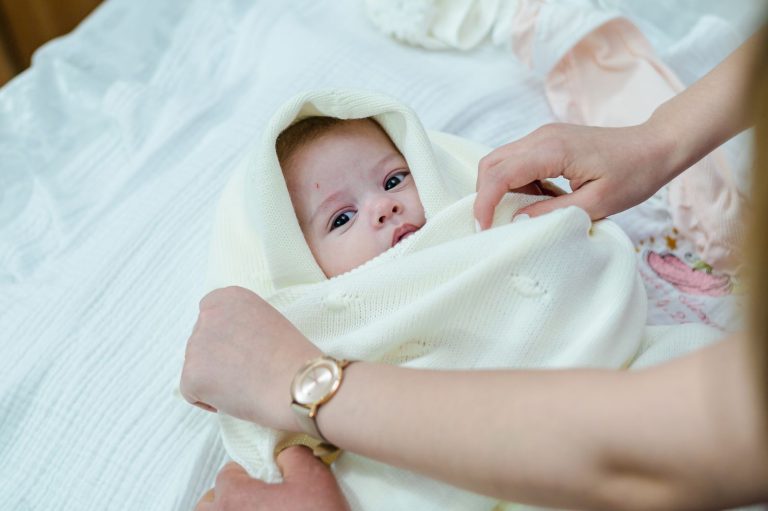
A snug swaddle recreates the tight, secure feeling of the womb and softens the startle reflex that jolts babies awake. Use a light, breathable blanket, keep the wrap snug at the chest but loose at the hips, and always lay a swaddled baby on the back. Stop swaddling as soon as your baby shows any sign of rolling, usually around 8 weeks. Read more in our note on swaddling and baby swings.
White noise and shushing
Steady white noise mimics the loud whoosh of blood flow your baby heard in the womb. A simple sound machine or a shushing app can calm crying fast. Keep the volume low to moderate, around the level of a soft shower, and place the device several feet away, never right next to the baby’s ear.
The hold-and-sway
Holding your baby chest-to-chest and swaying side to side, with a gentle bounce, is the original swing. Add a soft pat on the bottom in a slow, steady rhythm. This is your fallback for any meltdown, anywhere.
Why it matters: these methods need no gear, no power, and no money. They also build the bond between you and your baby, and they work in a power outage, a hotel, or the back seat of a car at a rest stop.
Real-life example: a light-sleeping baby wakes the moment the swing motor clicks off. Instead, the parent swaddles snugly, turns on low white noise, and does a slow hold-and-sway by the window. Ten minutes later the baby is calm, and there was no machine to fail.
More gear options: gliders, loungers, and play gyms
Beyond bouncers and carriers, a few other tools earn a spot in the rotation. None of them is a sleep surface, but each shines for awake, supervised time.
Gliders and seated rockers (for the grown-up)
A nursing glider rocks you while you hold the baby, blending the hold-and-sway with a comfy seat. It is great for late-night feeds and for soothing without standing. The motion comes from you, so there is no machine and no weight limit on the baby’s side.
Infant floor seats and loungers
A firm floor lounger gives a young baby a cozy spot to lie and look around while you stay close. These are for awake play and tummy-adjacent time, not sleep, and the baby should never be left alone in one. They are light, washable, and apartment-friendly.
Play gyms and tummy time mats
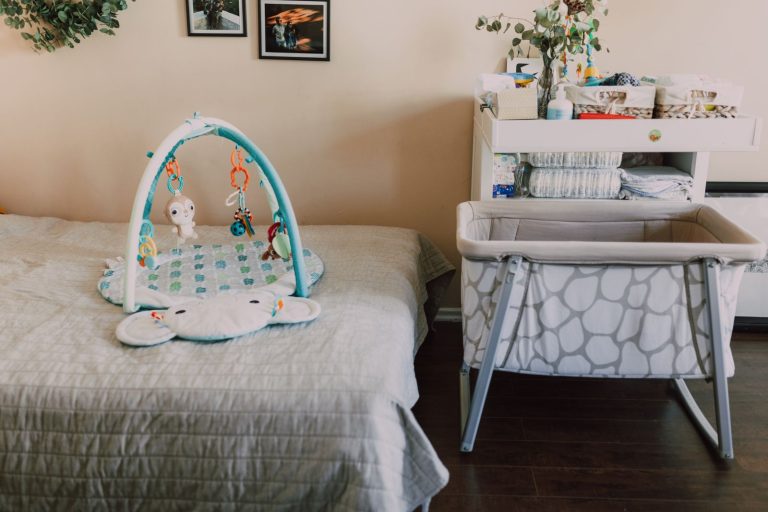
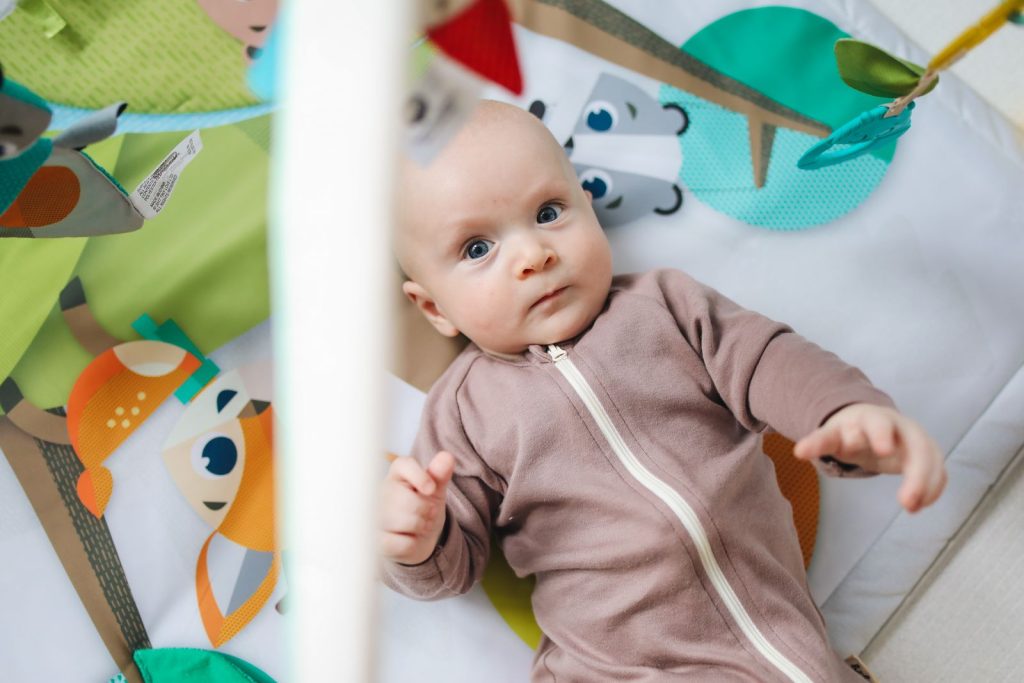
Sometimes a fussy baby is just bored. A play gym with dangling toys gives babies something to bat at and watch. Tummy time on a firm mat builds neck strength and breaks up the day. Both can reset a cranky mood without any motion at all.
Real-life example: a parent working from home cycles through the morning like this: carrier for the first meeting, play gym during emails, a few minutes of tummy time, then a glider feed. No swing needed, and the baby gets variety. For more on motion styles if you do buy gear, see our gliding and rocking swing roundup.
How to choose the right alternative (step by step)
With so many options, how do you pick? Work through these steps in order. It takes about two minutes and saves you from buying gear you will not use.
- Name the problem. Is it fussiness, your tired arms, no floor space, or a tight budget? The problem points to the tool.
- Check your space. Tiny apartment? Lean on a carrier, a foldable rocker, or no-gear methods. Room to spare? A bouncer or glider fits.
- Set a budget tier. Free moves (swaddle, white noise, hold-and-sway) cost nothing. Bouncers and rockers often land in $ to $$. Premium gliders sit higher.
- Match your baby’s age and head control. Newborns need full recline and gentle motion. Older, head-steady babies can handle uprights and play gyms.
- Test before you commit. Try a borrowed carrier or a floor sway first. See what your baby actually likes.
- Confirm safety. Harness, recline, weight limit, supervision, and never for sleep. If a product cannot meet all five, skip it.
Why it matters: most regret comes from buying first and thinking later. A clear set of questions keeps you from spending on a swing or seat your baby ignores.
Here is a quick way to compare your main paths side by side.
Real-life example: a parent with a $ budget and a small space names the problem as tired arms during dinner. The steps point straight to a foldable rocker plus a carrier. Done, with no overspending. If a swing still tempts you, compare portable swing picks against these lighter options.
- Never for sleep. Per AAP guidance, swings and inclined seats are not safe-sleep surfaces. If your baby dozes off, move them to a firm, flat crib or bassinet on their back.
- Always buckle the harness and never leave a baby unattended.
- Recline newborns in the most-reclined position until they have solid head control.
- Respect the weight limit and stop use once your baby can sit up unassisted. Buy only gear that meets ASTM/CPSC standards — see our safety standards guide.
Common mistakes (and easy fixes)
Even great alternatives can go wrong if used the wrong way. Here are the slip-ups we see most, and the simple fix for each.
Why it matters: most of these mistakes are about sleep and falls, the two biggest gear risks. Fixing them is free and takes seconds.
Real-life example: a tired parent at 2 a.m. is tempted to leave a sleeping baby in the carrier and lie down. The fix is to gently transfer the baby to the bassinet, even though it feels harder in the moment. For more pitfalls, our baby swing mistakes guide goes deeper.
Pro tips for everyday use
After researching dozens of seats, carriers, and soothing tools, a few tricks stand out. These are the small things that make a big difference.
- Layer your soothing. Motion plus sound plus snugness beats any one method. Sway while shushing, or wear the baby while walking outside.
- Keep batteries handy. If you do use any powered helper, a dead battery at the worst moment is real. Stock spares so a 2 a.m. swap takes 30 seconds.
- Warm the seat. A baby moved from warm arms to a cold seat often protests. A few seconds of your hand on the fabric helps.
- Follow the wind-down, not the clock. Watch for yawns and eye rubs. Soothe early, before the overtired meltdown.
- Have a no-gear plan. Power outages and travel happen. Know your hold-and-sway and swaddle moves cold.
Real-life example: during a storm that knocked out power, the swing was useless. The carrier and a hummed lullaby carried the family through the evening. That is why we always tell parents to master at least one no-gear method.
Real-life scenarios
Different homes need different answers. Here is how the alternatives play out in common situations.
The small apartment
Floor space is precious. A foldable rocker that slides behind the couch, plus a carrier, covers most needs without a big frame. White noise handles the rest. If you still want a powered option, our small-apartment swing roundup picks the most compact models.
The tight budget
When money is short, lean on the free toolkit first: swaddle, white noise, and the hold-and-sway. Add a single budget bouncer ($) only if you need hands-free time. You can soothe a baby beautifully for almost nothing.
The weekend at grandma’s house
No gear packed? A wrap carrier folds into a diaper bag and replaces a whole swing. Bring a travel sound machine or use a phone app. You are set without lugging a frame across town.
The colicky evening
For the daily fussy hour, layer it on: carrier, motion, and low white noise together. Movement that does not stop, like walking, often beats a fixed seat. Our note on soothing a colicky baby covers the gear side if you want more.
Frequently asked questions
What is the best alternative to a baby swing?
There is no single best one; it depends on your need. For hands-free awake time, a bouncer or rocker is the closest swap. For on-the-go soothing and colic, a baby carrier wins. For zero cost, a swaddle plus white noise plus the hold-and-sway works almost anywhere. Most parents use a mix.
Can my baby sleep in a bouncer or rocker instead of a swing?
No. Like swings, bouncers and rockers are inclined seats and are not safe for sleep. Per AAP guidance, sleep should always happen on a firm, flat surface, on the back, in a crib or bassinet. If your baby falls asleep in any seat, move them. See our guide on whether a baby can sleep in a swing.
Are baby carriers a safe swing alternative for newborns?
Yes, when used correctly. Pick a carrier rated for your baby’s weight, keep the airway clear with the chin off the chest and the face visible, and support the hips in an M shape. Follow the T.I.C.K.S. checklist. Always supervise, and remember a carrier is for soothing and awake time, not unsupervised sleep.
Do I even need a baby swing if I have these alternatives?
Often, no. Many families do fine with a carrier, a simple bouncer, and no-gear methods. A swing is a convenience, not a must-have. Our guide on whether baby swings are worth it helps you decide based on your budget and space.
What can I use to soothe a baby with no money at all?
Plenty. Swaddle the baby snugly, turn on low white noise or a shushing sound, and do a slow hold-and-sway with a gentle pat. A short walk while holding the baby also helps. These cost nothing and work in a power outage or on the road.
When should I stop using these seats and soothers?
Stop using any seat once your baby can sit up unassisted or reaches the weight limit, whichever comes first. Stop swaddling at the first sign of rolling, usually around 8 weeks. For seat-specific timing, see when to stop using a baby swing.
Is a swing or a car seat better for naps on the go?
Neither is a safe sleep surface. Both are inclined and meant for supervised, awake use, except a car seat while actually driving. For naps, transfer your baby to a flat, firm spot. We explain the risk in swing vs car seat for naps.
How do I keep motion soothing safe without a swing?
Use your own steady motion: sway, walk, or rock in a glider while holding the baby. Keep the baby’s airway clear and head supported, and never prop a baby in loose blankets or pillows. The motion that helps is gentle and rhythmic, not fast or jerky.
Key takeaways and quick checklist
Here is everything in one tidy list you can save or screenshot.
- You do not need a swing. Bouncers, rockers, carriers, and free methods all soothe well.
- The closest swap is a bouncer or rocker for hands-free awake time.
- A carrier is the most portable, budget-friendly, colic-friendly option.
- Swaddle, white noise, and the hold-and-sway cost nothing and always work.
- Match the tool to your problem, space, budget, and baby’s age.
- Rotate positions every 15 to 20 minutes to keep babies comfy.
- Never for sleep. Buckle the harness. Recline newborns. Respect the weight limit. Supervise.
- Always choose gear that meets ASTM/CPSC standards.
Want to keep learning? Browse our full baby swing learn hub, compare motion types in our swing vs bouncer vs rocker guide, or check the best baby swings roundup if you decide a swing is right for you after all. For a rocker many parents love as a swing stand-in, read our 4moms RockaRoo review.
The bottom line
After weighing its specifications, safety guidance and owner feedback, the Graco Simple Sway Baby Swing earns its spot among our top recommendations. Check the latest price and availability below.