By Marcus Reid · Updated June 18, 2026 · Research-based, safety-first guide · Price tiers, not fixed dollars.
Graco Simple Sway Baby Swing
If you are wondering about swaddling in a baby swing, you are not alone. It is one of the most common questions new parents ask, usually around 2 a.m. when a fussy newborn finally…
🛡️ Why you can trust Baby Swing Club
- A baby swing is for awake, supervised soothing only, so never let your swaddled baby fall asleep or sit alone in it.
- If your baby dozes off, gently move them to a firm, flat crib or bassinet and lay them down on their back.
- Always buckle the harness snugly and stay within the swing’s weight and age limits, even during short calm-down sessions.
✓ Pros
- Power — AC adapter or batteries
- Motion — Side-to-side sway, 6 speeds
- Sound — 15 songs/sounds + vibration
- Footprint — Slim full-size frame
If you are wondering about swaddling in a baby swing, you are not alone. It is one of the most common questions new parents ask, usually around 2 a.m. when a fussy newborn finally calms down in the swing and you do not want to break the spell. A snug swaddle plus gentle motion feels like the perfect combo. But is it actually safe? The short, honest answer is that you should never swaddle a baby for sleep in a swing, and you should be careful even for short, awake, supervised soothing.
I have spent years researching baby swings and reading the safety guidance from the American Academy of Pediatrics (AAP) and the Consumer Product Safety Commission (CPSC). The advice is clear and it does not bend: swings and other inclined seats are not safe sleep surfaces, and a swaddle removes a baby’s ability to move their arms if they roll or slump. Put those two facts together and you can see why doctors warn against it.
This guide walks you through everything in plain language. You will learn what swaddling in a swing really means, why parents keep asking about it in 2026, what the actual risks are, and what to do instead when your baby loves both the swaddle and the sway. I will cover safe ways to use a swing for awake time, how to transition a swaddled baby to a safe sleep space, the most common mistakes I see, and pro tips for everyday use. There are also real-life scenarios, a quick do-and-don’t table, and a clear checklist at the end.
My goal is simple. I want you to keep the soothing parts you love while removing the parts that are dangerous. Let us get into it, starting with the short answer so you have the bottom line right away.
What this guide covers
- The short answer: can you swaddle in a swing?
- Why parents ask this in 2026
- What swaddling in a swing actually means
- The real risks (and why doctors warn against it)
- Safe swing use: awake, supervised soothing
- How to move a swaddled baby to safe sleep (step by step)
- Common mistakes (and easy fixes)
- Pro tips for everyday use
- Real-life scenarios
- Frequently asked questions
- Key takeaways and safety checklist
The Short Answer: Can You Swaddle a Baby in a Swing?
Here is the bottom line in one sentence: do not swaddle a baby for sleep in a swing, and only consider a light swaddle for short, fully awake, closely watched soothing time. A baby swing is a seat with motion. It is built for awake play and gentle calming while you are right there watching. It is not a bed.
Why does this matter so much? Because a swing puts your baby in a reclined or upright position, and a swaddle keeps their arms pinned to their sides. If your baby slumps forward or to the side, they cannot push themselves back up or move their head to clear their airway. That combination is the exact thing safety experts warn against. The AAP is clear that swings and inclined seats are not safe for sleep, and a swaddle only raises the stakes.
So what should you do when your baby drifts off in the swing while swaddled? Move them. Gently transfer your baby to a firm, flat crib or bassinet, on their back, in their swaddle (if they are not rolling yet). The swing did its job by calming your baby. The crib finishes the job by keeping them safe while they sleep.
Real-life example: it is the middle of the night in a small apartment, and your newborn finally stops crying in the swing while wrapped in a soft swaddle. The urge to leave them there is huge. But the safe move is to scoop them up, keep the swaddle on, and lay them flat in the bassinet beside your bed. You lose thirty seconds of peace and you gain a safe night. For more on this exact trade-off, see our guide on whether a baby can sleep in a swing.
Why Parents Ask This in 2026
Two things have made this question more common than ever. First, swings have become smarter and cozier. Many 2026 models recline deep, hum white noise, and rock in several directions. They are so good at calming babies that parents naturally want to add a swaddle for that full “burrito” comfort. Second, parents are more aware of safe-sleep rules than they were a decade ago, so they want to do the right thing and they are double-checking before they act.
There is also the inclined-sleeper history that many parents remember. After well-publicized recalls of inclined sleep products, the CPSC set a federal rule that infant sleep products must have a sleep surface angle of 10 degrees or less. Swings are seats, not sleepers, so they sit at steeper angles. That is fine for awake soothing and unsafe for sleep. Adding a swaddle to a steep, soft seat is the opposite of a flat, firm, bare sleep surface.
Why it matters: getting this right protects your baby during the riskiest window, the first few months, when babies cannot reposition themselves. It also saves you stress. Once you know the rule, you stop second-guessing at 3 a.m.
Real-life example: a friend visits for the weekend at grandma’s house and brings a brand-new swing with a deep recline. Grandma remembers older advice and assumes a swaddled nap in the swing is fine. Knowing the current 2026 guidance lets you kindly explain why the baby naps in the travel bassinet instead. If you are weighing nap options, our comparison of baby swing vs car seat for naps explains why neither is a sleep surface.
What “Swaddling in a Swing” Actually Means
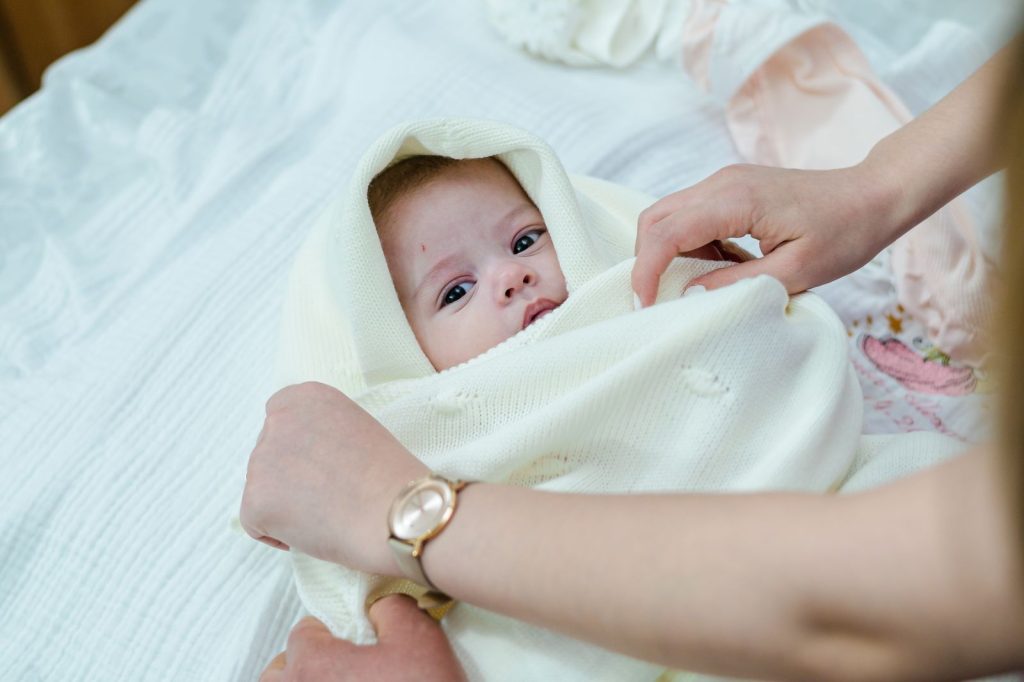
Swaddling is the old, trusted practice of wrapping a baby snugly in a thin blanket or a fitted swaddle sack. The wrap holds the arms close to the body. This calms the startle reflex (the sudden jerk that wakes newborns) and makes many babies feel secure, like they did in the womb. Done on a flat surface, swaddling is widely supported for young babies who are not yet rolling.
A baby swing is a separate thing. It is a powered seat that rocks, glides, or sways while your baby sits in a reclined position, held by a harness. Swings often add music, white noise, and timers. They are excellent at soothing a fussy baby for short stretches while you stay close.
“Swaddling in a swing” simply means combining the two: putting a wrapped baby into the moving seat. On its face it sounds cozy. The problem is that each tool is designed for a different situation. The swaddle is for calm and sleep on a flat surface. The swing is for awake, supervised soothing in a reclined seat. Stacking them puts a baby who cannot use their arms into a position where they might need their arms.
How it works in practice: the harness in a swing is meant to hold a baby in place, but it does not stop a small newborn from slumping their head forward, especially in an upright seat. A swaddle removes the arm movement that an older baby might use to adjust. So the “cozy combo” quietly removes safety margin.
Real-life example: you are making dinner one-handed and your baby is fussing. Wrapping them and dropping them in the swing for ten minutes while you stay in the same room, watching, is a far cry from leaving them swaddled and asleep in that swing while you step away. The first is short, awake, and supervised. The second is the risky version. If you want a deeper primer on the gear itself, our overview of baby swing motion types explains how different swings move.
The Real Risks (and Why Doctors Warn Against It)
Let us be direct about the dangers, because this is where strict guidance saves lives. There are three main risks when a baby is swaddled and unattended or asleep in a swing.
1) Positional asphyxia. In an upright or reclined seat, a young baby’s heavy head can fall forward or to the side. This can bend the airway and make breathing hard. A swaddle takes away the arm movement a baby might otherwise use, and it can make slumping worse. This is the single biggest reason the AAP says swings are not for sleep.
2) Rolling while wrapped. Once a baby starts to roll, a swaddle becomes dangerous anywhere, because a wrapped baby who rolls face-down cannot push up or turn their head. In a moving seat, the risk is even higher. You must stop swaddling the moment your baby shows any sign of rolling, usually around 8 weeks for early movers.
3) Overheating and loose fabric. A swaddle plus a padded seat can trap heat. Loose blanket edges can ride up toward the face. Both are hazards, and both get worse if you are not right there to fix them.
Safe vs. Unsafe at a Glance
Table: a quick guide to safe and unsafe swaddle-plus-swing situations.
Real-life example: during a late-night battery swap, the swing stops for a minute while you change the batteries. A swaddled, sleeping baby in that paused, reclined seat is exactly the setup experts warn about. The safer routine is to never let sleep happen in the swing in the first place. For the wider list of slip-ups, read our guide to baby swing mistakes to avoid.
Safe Swing Use: Awake, Supervised Soothing
Swings are genuinely useful. The trick is to use them for what they are good at: short bursts of awake calming while you are right there. You do not have to throw the swing away because swaddled sleep is off the table. You just need to keep the two jobs separate.
Here is the safe pattern. Use the swing while your baby is awake and fussy. Keep sessions short, ideally under 30 to 60 minutes at a time, and break up swing time across the day. Stay in the same room and keep your eyes on your baby. Recline a newborn fully until they have strong head control. Always buckle the harness, even for a quick spin. The moment your baby falls asleep, move them to a flat, firm bed.
Why it works: awake babies can still react, fuss, and shift. A watching adult can fix a slump, loosen fabric, or simply pick the baby up. That human supervision is the safety layer that makes short swing time reasonable. Take the supervision away, or add sleep, and the safety layer is gone.
If you want to keep some of the swaddle comfort during awake swing time, skip the full arms-in wrap. A light sleep sack or a loose blanket tucked low, with arms free, gives cozy warmth without pinning the arms. Keep it snug at the hips and loose at the chest, and never let fabric near the face.
- Never for sleep. Per AAP guidance, swings and inclined seats are not safe-sleep surfaces. If your baby dozes off, move them to a firm, flat crib or bassinet on their back.
- Always buckle the harness and never leave a baby unattended.
- Recline newborns in the most-reclined position until they have solid head control.
- Respect the weight limit and stop use once your baby can sit up unassisted. Buy only gear that meets ASTM/CPSC standards — see our safety standards guide.
Real-life example: your light-sleeping baby is overtired and cranky before bedtime. You wrap them loosely with arms free, set the swing to its slowest sway with soft white noise, and sit one foot away on the couch. Ten minutes later the fussing fades. You unbuckle, lift, and lay them flat in the crib to actually sleep. The swing calmed them; the crib keeps them safe. For more soothing ideas, see how to soothe a fussy baby and our picks for the best baby swings for newborns.
How to Move a Swaddled Baby to Safe Sleep (Step by Step)
The hardest moment is the transfer. Your baby finally calmed in the swing and you do not want to wake them. With a calm, slow routine, you can move a swaddled baby to a safe sleep space most of the time. Here is the method I use and recommend.
- Wait for deep sleep cues. Give it a few minutes after your baby calms. Limp arms and slow, even breathing mean they are deeply asleep and easier to move.
- Turn off the motion first. Gently stop the swing so the change in movement does not jolt them awake when you lift.
- Unbuckle slowly and support the head. Slide one hand under the head and neck, the other under the bottom. Keep the swaddle on if your baby is not rolling yet.
- Hold them close for a few seconds. A short pause against your chest lets a stirring baby settle before the move.
- Lay them on their back, flat and bare. Place your baby in a firm crib or bassinet, on the back, on a fitted sheet only. No pillows, bumpers, or loose blankets.
- Lower bottom first, then head. Set the hips down, then ease the head down last, keeping a hand under it until it rests.
- Keep a hand on the chest. Rest your hand lightly for 20 to 30 seconds. The steady pressure mimics the swaddle hold and helps them stay asleep.
Why this works: most “failed transfers” happen because of a sudden change, cold sheets, a jolt of movement, or a dropped head. Slowing each step removes those triggers. If your baby keeps waking, they may not be ready to be put down yet; give it another minute of deep sleep.
The swing is a tool for calming an awake baby, not a place for sleep. Soothe in the seat, sleep in the crib, every single time.
Real-life example: in a small apartment where the crib is in the same room, you can do this whole routine in under a minute. Stop the swing, lift, hold, lower, and rest your hand. With a few nights of practice it becomes second nature, and you stop fearing the transfer. For help building a bedtime routine, see how to get a baby to sleep without the swing.
Common Mistakes (and Easy Fixes)
The same handful of mistakes come up again and again. The good news is each one has a simple fix. Knowing them ahead of time keeps your baby safer and saves you worry.
- Mistake: letting a swaddled baby sleep in the swing. Fix: treat sleep as the trigger to move. The second your baby drifts off, transfer them flat to a crib or bassinet.
- Mistake: leaving the room while baby is swaddled in the swing. Fix: stay within arm’s reach and eyes-on. If you must step away, take the baby with you or put them down safely first.
- Mistake: skipping the harness for a “quick” sit. Fix: buckle every time. Babies wiggle more than you expect, and a swaddle can hide a slide.
- Mistake: an upright recline for a floppy-headed newborn. Fix: use the most-reclined setting until your baby has strong, steady head control.
- Mistake: a loose blanket swaddle with edges near the face. Fix: use a fitted swaddle sack on flat surfaces only, and keep all fabric well below the chin.
- Mistake: swaddling after rolling starts. Fix: switch to an arms-out sleep sack as soon as your baby shows any rolling.
- Mistake: long, back-to-back swing sessions. Fix: keep sessions short and spread them out; swings are for soothing, not all-day seating.
- Mistake: ignoring the weight and age limits. Fix: check the manual and stop use at the stated limit or once baby can sit up unassisted.
Real-life example: a tired parent props the phone, starts the swing, and steps into the next room to fold laundry while the baby is swaddled and dozing. That single habit combines three mistakes at once: sleep, no supervision, and a swaddle in a seat. Folding laundry next to the swing, with the baby awake, fixes all three. For limits, see our breakdown of baby swing weight and age limits and how long a baby can be in a swing.
Pro Tips for Everyday Use
These are the small habits that separate stressed-out swing use from calm, confident swing use. None of them are hard. They just take a little planning.
- Pick a swing with a deep, smooth recline. A good recline keeps a newborn’s airway open during awake soothing. Jerky motion can startle, so test the slowest setting first.
- Use white noise instead of a tight wrap. Steady sound calms many babies as well as a swaddle does, without pinning the arms. Our roundup of swings with music and sounds covers good options.
- Set a visible timer. A phone timer for 20 to 30 minutes keeps short sessions short and reminds you to move a sleeping baby.
- Keep the bassinet right next to the swing. A close, flat sleep spot makes the safe transfer easy and fast.
- Practice the transfer during daytime naps. Calmer daytime reps make the 2 a.m. version smoother.
Why these help: they let you keep the soothing benefits of the swing while building in supervision, time limits, and an easy path to safe sleep. That is the whole game. You are not choosing between comfort and safety; you are getting both by separating the jobs. If you are still shopping, our features to look for guide and the best cradle swings roundup are good starting points.
Real-Life Scenarios
Rules are easier to follow when you can match them to your own day. Here are common situations and the safe move for each.
The 2 a.m. wake-up in a small apartment
Your newborn wakes hungry, then will not settle. You feed, then wrap them and use the swing’s slowest sway with white noise while you sit beside it. When the breathing slows and the arms go limp, you stop the swing, lift, and lay them flat in the bassinet two feet away, still swaddled. Total awake-soothing time: about ten minutes. Sleep happens in the bassinet, not the swing.
Making dinner one-handed
It is the witching hour and your baby is fussy while you cook. You put them, awake, in the reclined swing in the same room, harness buckled, and skip the full swaddle so the arms stay free. You glance over every minute. The moment they look sleepy, you turn off the stove if you can and move them to a flat nap spot, or hold them. The swing buys you focused cooking time, not a hands-off nap.
A weekend at grandma’s house
Grandma’s swing is older and reclines only partway. For a young newborn, that upright angle is not ideal, swaddle or not. You bring your own travel bassinet for all sleep, use the swing only for short awake play with close watching, and explain the current AAP guidance kindly. Everyone relaxes once the plan is clear.
The light sleeper who hates the crib
Some babies fight the crib at first. You use the swing to calm them while awake, then practice gentle, slow transfers many times a day. Warm the sheet, lower bottom first, and keep a hand on the chest. Over a week, the crib starts to feel normal. Patience here beats the risk of swaddled swing sleep every time. For alternatives, see baby swing alternatives.
Frequently Asked Questions
Is it ever safe to swaddle a baby in a swing?
Only for short, fully awake, closely supervised soothing, and even then with caution. It is never safe for sleep. The AAP says swings and inclined seats are not safe-sleep surfaces, and a swaddle removes the arm movement a baby might need. The moment your baby falls asleep, move them to a firm, flat crib or bassinet on their back.
Why can’t my baby sleep swaddled in the swing if they sleep so well there?
Because the swing’s reclined or upright angle can let a young baby’s head slump and bend the airway, and a swaddle pins the arms so the baby cannot reposition. Sleeping well is not the same as sleeping safely. Use the swing to calm an awake baby, then transfer them to a flat, firm bed for actual sleep.
What should I use instead of a swaddle in the swing?
For awake swing time, skip the full arms-in wrap. A loose sleep sack or a light blanket tucked low, with arms free, gives cozy warmth without pinning the arms. White noise and a slow, deep recline often calm a baby just as well as a tight wrap.
At what age should I stop swaddling completely?
Stop swaddling as soon as your baby shows any sign of rolling, often around 8 weeks for early movers and by about 3 to 4 months for most. A swaddled baby who rolls face-down cannot push up or turn their head, so switch to an arms-out sleep sack at the first sign of rolling.
How long can my baby stay in a swing?
Keep sessions short, generally under 30 to 60 minutes at a time, and break swing time up across the day. Swings are for soothing, not for long stretches of seating. See our guide on how long a baby can be in a swing for more detail.
Is a swing safer than a swaddle for a newborn?
They do different jobs, so it is not a fair comparison. A swaddle on a firm, flat surface is supported for pre-rolling babies during sleep. A swing is for awake, supervised soothing. The unsafe option is combining them for unsupervised or sleeping use.
What do I do if my swaddled baby falls asleep in the swing anyway?
Treat sleep as your cue to move. Stop the motion, gently unbuckle while supporting the head, keep the swaddle on if your baby is not rolling yet, and lay them flat on their back in a crib or bassinet. A hand on the chest for 20 to 30 seconds helps them stay asleep.
Are deep-recline swings safe for swaddled awake time?
A deep, smooth recline is better than an upright seat for a newborn because it helps keep the airway open. But even with a deep recline, swaddled time should be awake and supervised, never for sleep. Match the recline to your baby’s head control and stage.
Key Takeaways and Safety Checklist
Here is the whole guide boiled down to what matters. Keep the soothing parts you love, and cut the parts that are dangerous. When in doubt, soothe in the seat and sleep in the crib.
- Never swaddle for sleep in a swing. The swing is not a sleep surface; move a sleeping baby to a flat, firm crib or bassinet on their back.
- Only swaddle in a swing when awake and watched. Stay within arm’s reach, eyes-on, for short sessions.
- Buckle the harness every time, even for a quick sit.
- Recline newborns fully until they have strong, steady head control.
- Stop swaddling at the first sign of rolling and switch to an arms-out sleep sack.
- Keep fabric low and loose at the chest, never near the face.
- Respect weight and age limits and stop use once baby can sit up unassisted.
- Buy gear that meets ASTM/CPSC standards and check for recalls.
You do not have to give up the swing or the swaddle. You just keep them in their lanes: the swaddle and the crib for safe sleep, the swing for short awake soothing while you watch. That simple split protects your baby and lets you both rest easier.
Want to keep learning? Browse our full baby swing learning hub, double-check current baby swing recalls, and review the newborn safety guide before your next nap-time decision.
The bottom line
After weighing its specifications, safety guidance and owner feedback, the Graco Simple Sway Baby Swing earns its spot among our top recommendations. Check the latest price and availability below.