By Marcus Reid · Updated June 18, 2026 · Research-based, safety-first guide · Price tiers, not fixed dollars.
Graco Simple Sway Baby Swing
Learning how to clean a baby swing is one of those small skills that pays off every single week. Babies spit up. They drool. They have blowouts at the worst times. And a swing seat…
🛡️ Why you can trust Baby Swing Club
- Always read the care tag first, then spot-clean the straps and buckle with only mild soap and water by hand.
- Never use bleach, harsh solvents, or a hot dryer on harness straps, since they weaken hidden fibers that can fail later.
- A baby swing is for awake, supervised play only, so always buckle the harness and follow the weight and age limits.
✓ Pros
- Power — AC adapter or batteries
- Motion — Side-to-side sway, 6 speeds
- Sound — 15 songs/sounds + vibration
- Footprint — Slim full-size frame
Learning how to clean a baby swing is one of those small skills that pays off every single week. Babies spit up. They drool. They have blowouts at the worst times. And a swing seat traps all of it in the fabric, the straps, and the little crumbs that fall into the seams. After researching dozens of swings, I can tell you the messiest part is almost never the part you expect.
The good news is that a deep clean is simple once you know the order of steps. You take the soft parts off, you wipe down the hard frame, you spot-treat the stains, and you let everything dry all the way before you snap it back together. Do that, and your swing stays fresh, safe, and free of that sour milk smell that creeps in over time.
This guide walks you through the whole thing in plain steps. I will show you how to read the care tag so you do not ruin the fabric, how to clean the harness straps the right way (this part matters for safety), and how to handle a swing that does not come apart easily. You will also get a do-and-do-not table, a few pro tricks I use at home, and answers to the questions parents ask most. Whether you have a big plug-in swing in the living room or a small portable one you haul to grandma’s house, the same basic method works. Let’s get your swing clean, dry, and ready for the next nap-time wind-down. And because a clean swing is only half the job, I will point you to trusted safety steps along the way so you keep using it the right way.
What’s in this guide
- The short answer: how to clean a baby swing
- Why a clean swing matters in 2026
- Step 1: Read the care tag before you touch anything
- Step 2: Take the swing apart the smart way
- Step 3: Wash the seat pad and fabric
- Step 4: Clean the harness straps and buckle (safety zone)
- Step 5: Wipe the frame, motor base, and toy bar
- Step 6: Dry everything and put it back together
- Common mistakes (and easy fixes)
- Pro tips for everyday use
- Real-life cleaning scenarios
- Frequently asked questions
- Key takeaways and quick checklist
The short answer: how to clean a baby swing
To clean a baby swing, take off the seat pad and harness, machine-wash or hand-wash the fabric per the care tag, hand-wash the straps in warm soapy water, wipe the hard frame and motor base with a damp cloth and mild soap, then let every piece dry fully before you put it back together. That is the whole method in one breath.
Why does this order matter? Because the soft parts and the hard parts need very different care. Fabric can often go in the wash. The motor base and battery box never can — water and electronics do not mix. Doing the steps in order keeps you from making a mistake you cannot undo, like shrinking a seat pad or soaking a circuit board.
Here is how it works in real life. On a slow weekend morning, I pull the seat pad off, toss it in the wash on a gentle cycle, and while it spins I wipe down the frame with a soapy cloth. By the time I have wiped the toy bar and the tray, the pad is ready to hang dry. The whole active part takes about fifteen minutes. The drying is what takes time, so I start early in the day.
A quick wipe-down can happen any day. A full deep clean is smart every couple of weeks, or right away after a blowout or a big spit-up. If your baby has been sick, clean it sooner and let it dry in fresh air. Keep reading for the exact steps, plus the parts most parents forget.
Why a clean swing matters in 2026
A baby swing is one of the few things your newborn touches with their whole body, day after day. Their cheek rests on the headrest. Their hands grab the straps. Milk, drool, and tiny food bits work into the fabric and the seams. Left alone, that builds up into a sour smell and a layer of grime you can actually feel.
It matters more than ever now because parents are using swings as a calm-down spot, not a bed. That is the safe way to use one. The American Academy of Pediatrics (AAP) is clear that swings and inclined seats are not safe-sleep surfaces. Since your baby spends awake, alert time in the seat, a clean and fresh seat makes that time nicer and lowers the spread of germs at home.
There is also a money side. Swings hold their value when they are clean. If you plan to resell yours or hand it down to a friend, a spotless seat and fresh straps make a real difference. A grimy swing with stained straps is hard to pass on. If you are on the other end and buying one secondhand, read our guide on whether used baby swings are safe before you bring one home.
Real-life example: in a small apartment, the swing often lives right next to where you cook, eat, and relax. Smells travel fast in tight spaces. A clean swing keeps the whole room feeling fresher, and it keeps you from wrinkling your nose every time you walk past it. That alone is worth the fifteen minutes.
A clean swing is not about being fussy. It is about giving your baby a fresh, safe place to settle — and keeping a pricey piece of gear in good shape for years.
- Never for sleep. Per AAP guidance, swings and inclined seats are not safe-sleep surfaces. If your baby dozes off, move them to a firm, flat crib or bassinet on their back.
- Always buckle the harness and never leave a baby unattended.
- Recline newborns in the most-reclined position until they have solid head control.
- Respect the weight limit and stop use once your baby can sit up unassisted. Buy only gear that meets ASTM/CPSC standards — see our safety standards guide.
Step 1: Read the care tag before you touch anything
Before any cleaning, find the care tag. It is usually sewn into the seam of the seat pad or printed on a label under the seat. This little tag tells you everything: machine wash or hand wash only, cold or warm water, tumble dry or air dry, and whether bleach is a hard no. Skipping this step is the number one way parents ruin a seat pad.
Why it matters: swing fabrics are often blends with foam padding inside. Hot water can shrink the cover so it no longer fits the seat frame. A hot dryer can melt foam or warp plastic clips sewn into the fabric. The tag is the maker telling you exactly what the fabric can take. Trust it over any tip you read online, including mine.
How to use it: read the symbols, then snap a photo with your phone. Tags fade and tear over time, so a saved photo means you always have the rules handy. If the tag is already gone, default to the gentlest path — cold water, gentle cycle or hand wash, and air dry. Gentle never hurts the fabric; aggressive can.
Real-life example: a friend tossed a swing pad in a hot wash and hot dryer to save time before guests arrived. The cover shrank just enough that the straps no longer lined up with the slots. She had to order a replacement pad and wait a week. A ten-second look at the tag would have saved the whole headache.
Step 2: Take the swing apart the smart way
A swing comes apart in layers: the seat pad, the headrest insert, the harness straps, the toy bar, and sometimes a removable tray. Taking it apart in the right order makes cleaning faster and putting it back together painless. The trick is to remember how it all fit before you pull it off.
Here is a simple step-by-step to disassemble before you clean:
- Unplug it or remove the batteries. Always power down before you handle the seat or base.
- Take a few photos. Snap the strap routing and how the pad attaches. This is your map for reassembly.
- Remove the toy bar and any clip-on toys. Set them aside in one spot.
- Unthread the harness straps from the seat slots so the pad comes off cleanly.
- Lift off the seat pad and headrest insert. Note which way they face.
- Pop off the tray if your model has one.
Why it matters: cleaning a swing while it is still assembled means you miss the dirtiest spots — the crumbs under the pad and the gunk wrapped around the strap slots. Pulling the parts apart also lets each piece dry on its own, which stops mildew from forming in folded, damp fabric.
Real-life example: the first time I cleaned a multi-motion swing, I did not take photos and spent twenty minutes guessing how the straps threaded back through. Now I always shoot three quick photos first. It turns a frustrating puzzle into a two-minute job. If your model is tricky, our baby swing setup guide shows how the pieces fit together.
Step 3: Wash the seat pad and fabric
The seat pad and headrest hold most of the mess, so this is the heart of the job. Once the tag confirms it is safe, you have two clean paths: a gentle machine wash or a careful hand wash. Both work well. The right choice depends on what the tag allows and how delicate the fabric feels.
Machine washing (if the tag allows)
Place the pad in a mesh laundry bag to protect any sewn-in clips and straps. Use cold water, a gentle cycle, and a small amount of mild, fragrance-free detergent. Skip fabric softener — it can leave a coating that traps odors over time. When the cycle ends, reshape the pad and hang it to dry unless the tag clearly says tumble dry low.
Hand washing (the safe default)
Fill a clean sink or tub with cool water and a squirt of mild soap. Press the pad down to soak it, then gently rub stained areas with a soft cloth. Rinse until the water runs clear with no soap left behind. Press out the water with a towel — do not wring hard, since twisting can break down the foam inside.
Why it matters: gentle washing lifts milk, drool, and food without breaking down the fabric or the foam. Harsh heat and strong cleaners shorten the life of the pad and can leave it stiff or faded. Slow and gentle keeps it soft and fitting right for the long haul.
Real-life example: after a giant dinner-time blowout, I rinsed the worst of it under the tap first, then did a cold gentle machine wash in a mesh bag. The pad came out clean and still fit the seat perfectly. The pre-rinse is the secret — it stops a stain from setting while you get the wash going.
Step 4: Clean the harness straps and buckle (safety zone)
The harness is the most important safety part of the swing, so it gets special care. Straps soak up drool and spit-up right under your baby’s chin, and the buckle collects crumbs that can keep it from clicking shut. A clean, working harness is not a nice-to-have — it is the thing that keeps your baby secure.
Hand wash the straps only. Do not put them in the washer or dryer, and never soak them for a long time. Heat and harsh chemicals can weaken the woven fibers, and weak straps are a real safety risk. Use warm water and a little mild soap, scrub gently with a soft cloth or toothbrush, rinse well, and let them air dry fully.
For the buckle, rinse it under warm running water to flush out crumbs and dried milk. Do not use oil or any lubricant — that can attract more grime and make the latch slip. If a buckle still will not click cleanly after rinsing and drying, stop using the swing and contact the maker for a replacement part.
Why it matters: the harness is what holds your baby safely in a reclined or upright seat. A buckle clogged with dried milk might not latch all the way, and a strap weakened by bleach could give out. Treating this part gently protects the one job the swing must always do right.
Real-life example: a swing that sat in storage came to me with a buckle so caked with old milk it barely clicked. A few minutes under warm running water and a soft brush brought it back to a clean, solid snap. No oil, no shortcuts — just patience and warm water.
Step 5: Wipe the frame, motor base, and toy bar
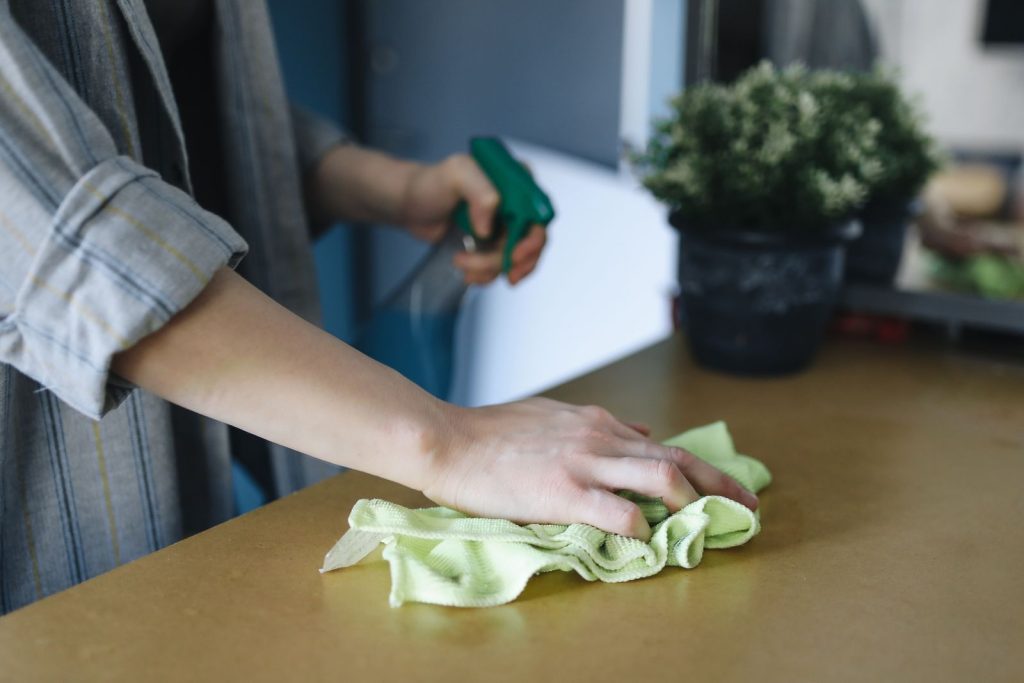
With the soft parts off, the hard parts are easy. The frame, motor base, battery box, tray, and toy bar all clean up with a damp cloth and a bit of mild soap. The single rule here: keep water away from anything electronic. Never spray or pour water on the motor base or battery compartment.
Wipe the frame and legs with a soapy cloth, then go over them with a clean damp cloth to remove soap. For the motor base, use a barely-damp cloth and wipe gently — never let water drip inside. Open the battery box, brush out any dust, and check for corrosion. The toy bar and toys usually wipe clean; check the toy tags, since some plush toys are surface-wipe only.
Why it matters: the motor and battery box are the brains of the swing. Water inside can short the electronics and kill the swinging motion for good. A careful wipe keeps the base working while still getting rid of dust and sticky spots. This is also a smart moment to look for loose screws or cracks.
Real-life example: during a 2 a.m. battery swap, I noticed the battery box had a little crusty buildup from an old leak. A dry brush and a barely-damp cloth cleaned it up, and the swing kept humming along. Cleaning the base is the perfect time to catch a battery problem before it spreads.
While you have it apart, give the swing a quick safety once-over. Check that the frame is steady and the motion still feels smooth. If anything seems off, compare it against our guide to key swing features and confirm your model has not been flagged on our baby swing recalls list.
Step 6: Dry everything and put it back together
Drying is the step most parents rush, and rushing it is how mildew starts. Every piece — the pad, the headrest, the straps, and the frame — needs to be fully dry before you reassemble. Damp fabric folded against plastic is the perfect place for mold and that musty smell to grow.
Hang the seat pad and straps somewhere with good airflow. A spot near an open window or a fan speeds things up. Make sure the foam inside the pad is dry all the way through, not just dry on the surface. Press a dry towel against thick spots to pull out extra moisture, and give it more time if it still feels cool or damp.
Once everything is bone dry, rebuild using the photos you took at the start. Thread the straps back through the correct slots, set the pad and headrest the right way around, clip on the toy bar, and snap the tray in place. Then buckle the harness and tug each strap to confirm it is anchored and secure before your baby goes back in.
Why it matters: a fully dry, correctly rebuilt swing is both fresh and safe. Skipping the dry time leads to odors within days. Rushing the rebuild can leave a strap routed wrong, which weakens how well the harness holds. A few extra minutes of care here protects all the work you just did.
Real-life example: I once put a pad back while it was still a touch damp because nap time was looming. Two days later, the seat smelled musty and I had to wash it all over again. Now I clean early in the day and let the parts dry completely. Plan around the drying, not the washing.
Common mistakes (and easy fixes)
Most cleaning problems come from a few simple slip-ups. Here are the ones I see most, and how to avoid them.
Why these matter: each mistake either weakens a safety part or shortens the life of the swing. The fixes are all easy and cost nothing extra. The theme is simple — be gentle with the fabric, protect the straps, and keep water away from the electronics.
Real-life example: a parent I know kept getting a faint sour smell no matter how often she washed the pad. The real culprit was the strap slots, where dried milk hid out of sight. A quick hand-scrub of the straps and slots finally fixed it. The mess is often hiding in the spot you skip. For more pitfalls, see our baby swing mistakes to avoid.
Pro tips for everyday use
Here are a few tricks that make the job faster and the results better. These are the small things that separate a quick fresh-up from a true deep clean.
- Keep a microfiber cloth nearby. A daily ten-second wipe of the headrest and tray stops buildup before it starts.
- Pre-rinse blowouts right away. Cold water before the stain sets is far easier than scrubbing it later.
- Use a soft toothbrush for seams. It reaches the strap slots and tight corners a cloth cannot.
- Air it out in sunlight. A few hours of fresh air and indirect sun help knock out lingering odors naturally.
- Save the photos. Keep your disassembly photos in a phone album so every future clean is faster.
Why it matters: little habits beat big scrub sessions. A daily wipe and a quick pre-rinse mean your deep cleans are rare and easy. The swing stays fresh with almost no effort, and the fabric lasts longer because you are not constantly washing out set-in stains.
Real-life example: at grandma’s house for a weekend, the only swing on hand had a deep stain that had set in over months of skipped wipes. A daily ten-second wipe would have prevented it entirely. Tiny habits truly do add up.
Real-life cleaning scenarios
Cleaning needs change with your life. Here is how to handle the situations parents run into most.
The big blowout while making dinner
You are stirring a pot one-handed and the swing erupts. First, get your baby safe and changed. Then pull the seat pad and rinse the worst of it under cold water right away so it does not set. Hand-wash the straps, start a cold gentle wash on the pad, and wipe the frame while it runs. Pre-rinsing is what saves the fabric here.
The light-sleeping baby and a noisy washer
If your washer is loud and your baby naps light, save the machine wash for a wake window or hand-wash the pad in the sink instead. A quiet sink wash lets you clean without risking the nap. For more on protecting naps and sound, see our roundup of the quietest baby swings.
The small apartment with no outdoor space
No balcony? Hang the pad and straps over a drying rack near an open window or run a fan across them. Good airflow matters more than sunshine for drying. Just make sure every piece is fully dry before you rebuild, since tight spaces hold moisture and smells longer.
The travel swing headed to grandma’s house
Before a trip, give a portable swing a quick wipe and a fresh strap rinse so it arrives clean. Pack a couple of microfiber cloths for on-the-go spills. A small, foldable swing is easy to clean in any sink, which is part of why families love them for travel.
Why it matters: matching your cleaning method to your real day makes it far more likely you will actually do it. A method that fits a loud apartment or a busy dinner hour is a method you will keep up with. The best routine is the one you will stick to.
Frequently asked questions
How often should I clean a baby swing?
Wipe high-touch spots like the headrest and tray every day or two, and do a full deep clean every couple of weeks. Clean right away after a blowout, a big spit-up, or any illness. Babies who spit up a lot may need the pad washed more often. When in doubt, clean it sooner rather than later.
Can I machine wash the baby swing seat cover?
Often yes, but only if the care tag allows it. When it does, use a mesh laundry bag, cold water, a gentle cycle, and mild detergent, then hang to dry unless the tag clearly says tumble dry low. If the tag says hand wash only or the tag is missing, hand-wash to be safe. The tag always wins over any general tip.
How do I get the sour milk smell out of a baby swing?
That smell almost always lives in the fabric and the strap slots. Hand-wash the straps, wash the pad per the tag with a little mild soap, and skip fabric softener since it can trap odors. Let everything air out fully, ideally near fresh air. If the smell lingers, the strap slots are usually the hidden source.
Can I put the harness straps in the washing machine?
No. Always hand-wash the straps in warm soapy water and let them air dry. The washer and dryer can weaken the woven fibers over time, and the harness is the part that keeps your baby secure. Never use bleach or a hot dryer on the straps. If they ever feel weak or frayed, replace them with a maker-approved part.
Is it safe to use disinfectant wipes on a baby swing?
Use caution. Many wipes leave chemical residue that can irritate a baby’s skin, and the fragrance can bother sensitive noses. For most cleaning, mild soap and water are plenty. If you do use a wipe on hard plastic, follow it with a damp cloth to remove residue, and keep wipes away from the harness straps entirely.
How do I clean a swing that does not come apart?
Some budget or older swings have pads that are hard to remove. In that case, spot-clean the fabric in place with a damp soapy cloth, blot rather than soak, and let it air dry fully with the swing unplugged. Work in small sections so the fabric never gets too wet. It takes longer, but it still gets the job done.
How long does a baby swing take to dry?
Plan for several hours, and sometimes most of a day for thick foam pads. Surface fabric may feel dry quickly, but the foam inside holds moisture longer. Press a dry towel against thick spots and use a fan or open window to speed things up. Never rebuild until every piece is dry all the way through.
Does cleaning help when buying or selling a used swing?
Absolutely. A clean swing with fresh straps is far easier to resell or hand down, and it shows the gear was well cared for. If you are buying secondhand, give it a full clean before first use and check it over carefully. Our guide on used baby swing safety walks through what to inspect.
Key takeaways and quick checklist
Cleaning a baby swing is simple when you follow the order: read the tag, take it apart, wash the fabric, gently clean the straps, wipe the frame, dry everything fully, and rebuild. Keep up small daily wipes and your deep cleans will be quick and rare.
- ✅ Read the care tag first and snap a photo of it for next time.
- ✅ Power down — unplug or remove batteries before you start.
- ✅ Photograph the strap routing before you take it apart.
- ✅ Wash the pad gently in cold water; hang to dry unless the tag says otherwise.
- ✅ Hand-wash the straps only — never machine wash, never bleach, never a hot dryer.
- ✅ Keep water out of the motor and battery box.
- ✅ Dry every piece fully before you rebuild to stop mildew.
- ✅ Tug-test the harness after rebuilding to confirm it is secure.
Keep using your swing the safe way, too. Remember it is for awake, supervised time only — never for sleep. For more, browse our full baby swing learning hub, check how the seat fits your space in where to put a baby swing, and review how long a baby can safely be in a swing. A clean swing and safe habits together give your baby the best of both.
The bottom line
After weighing its specifications, safety guidance and owner feedback, the Graco Simple Sway Baby Swing earns its spot among our top recommendations. Check the latest price and availability below.